
Character Details
| be allowed (to);can | Ascii: N/A | w632 | |||||
|---|---|---|---|---|---|---|---|
| Hanyu | Pinyin | Phonetics | Tone | Category | Alternative Sounds | ||
| 可以 | kěyǐ | kay-ee | 3+3 | 6 | Not Available | ||
| Frequency | Equation | Components | Wikitionary | Picture | |||
| >327 | 168+99 | can; may + using; by means of; with | 可以 link |  | |||
| Story | Notes | ||||||
| Not Yet Developed | The phrase in example 1 is used to express prohibition or inability. If you want a softer way to say "can't," you can use 不能 (Bùnéng), which implies physical or situational impossibility rather than restriction. | ||||||
| Examples | |||||||
| 1. Absolutely! | 2. Can I leave now? | ||||||
| Strokes | |||||||
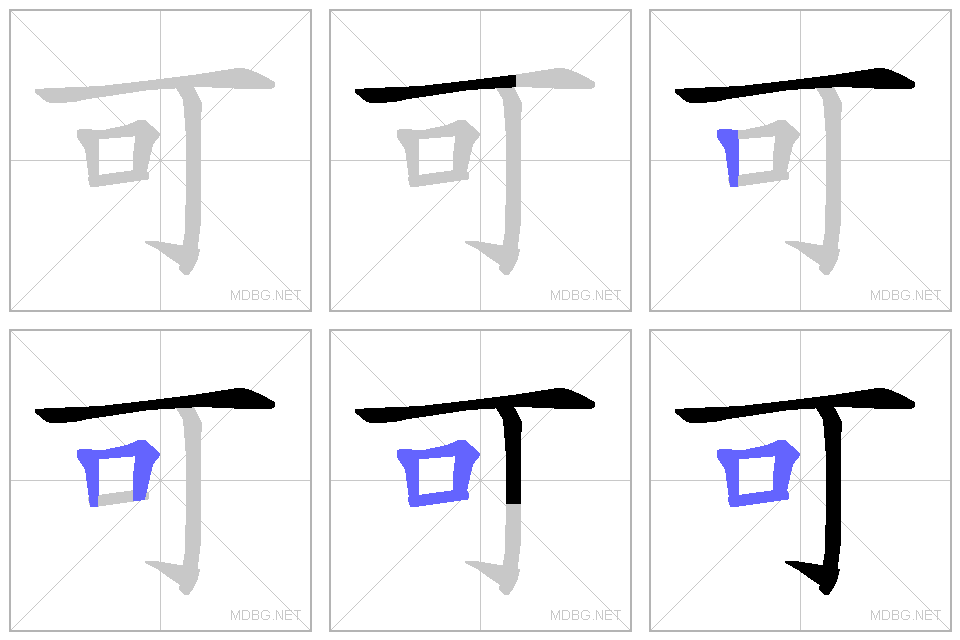  | |||||||