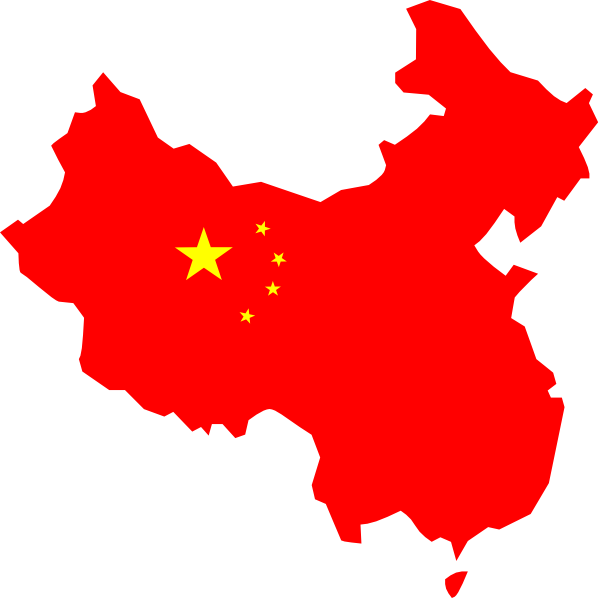
Chinese Communist Party
By 1927, the differences between the Nationalists and
Communists in terms of beliefs and goals for China was so
great that the Chinese Civil War erupted. The Communists
received some aid from the Soviet Union but were vastly
outgunned by the Kuomintang and the armies of the warlords
allied with them.
The Chinese Communists had several things going for them.
Firstly, unlike the
Kuomintang, they were seen as free from foreign influence
and corruption. Secondly, they operated in secret cells,
which made destroying the Communists almost impossible.
Third, the Communists operated in the countryside. For the
most part, they were peasants hiding among peasants, with
goals similar to the people around them. Fourth, after some
hard lessons, the Communists began to carry out a guerrilla
war, striking suddenly and retreating before a response could
be coordinated. Lastly, the Communists had an appealing
philosophy that was combined with really effective
propaganda. The Chinese Communist beliefs called for rule
from the bottom-up, rather than the top-down, to put it
simply. Instead of slow reforms as the Nationalists preached,
the Communists called for the immediate overthrow and
eradication of the landlord class, and in the areas under
their control in the countryside, they did just that.
By 1931, China was a divided country. War existed in fits
and starts between the Communists and the Nationalists, the
foreigners controlled much of the economy, and what central
government did exist was forced to compromise with largely
corrupt warlords who controlled their own private armies,
some of them quite large. China, at this point, was not a
strong country and became something of a target, and it was
in 1931 that Japan decided to act against China, something
that they had been planning for quite some time.
Between 1975 and 1976, the internal power struggles
divided the CCP, and Mao largely let the sides continue their
feuding. It is possible that he knew that if they went after
each other, they would not be able to attack him. The problem
was that this undermined the progress that Zhou Enlai and
Deng Xiaoping had made to fix the problems caused by the
Cultural Revolution. By
the end of 1975, the Gang of
Four would finally take the control they felt they
deserved.